NATHAN B. BASKIND
For nearly eighty years, my great uncle Nathan Baskind was missing in action. Then, in the spring of 2023, an unexpected email changed everything: Nate had been found.
My new book project—Finding Nathan Baskind: A Jewish American Soldier, a Nazi Grave, and the Great-Niece Who Brought Him Home—tells the extraordinary story of how one email led me into a historical mystery I never expected to solve. What began as a search for answers became a deeply personal effort to bring Nate home.
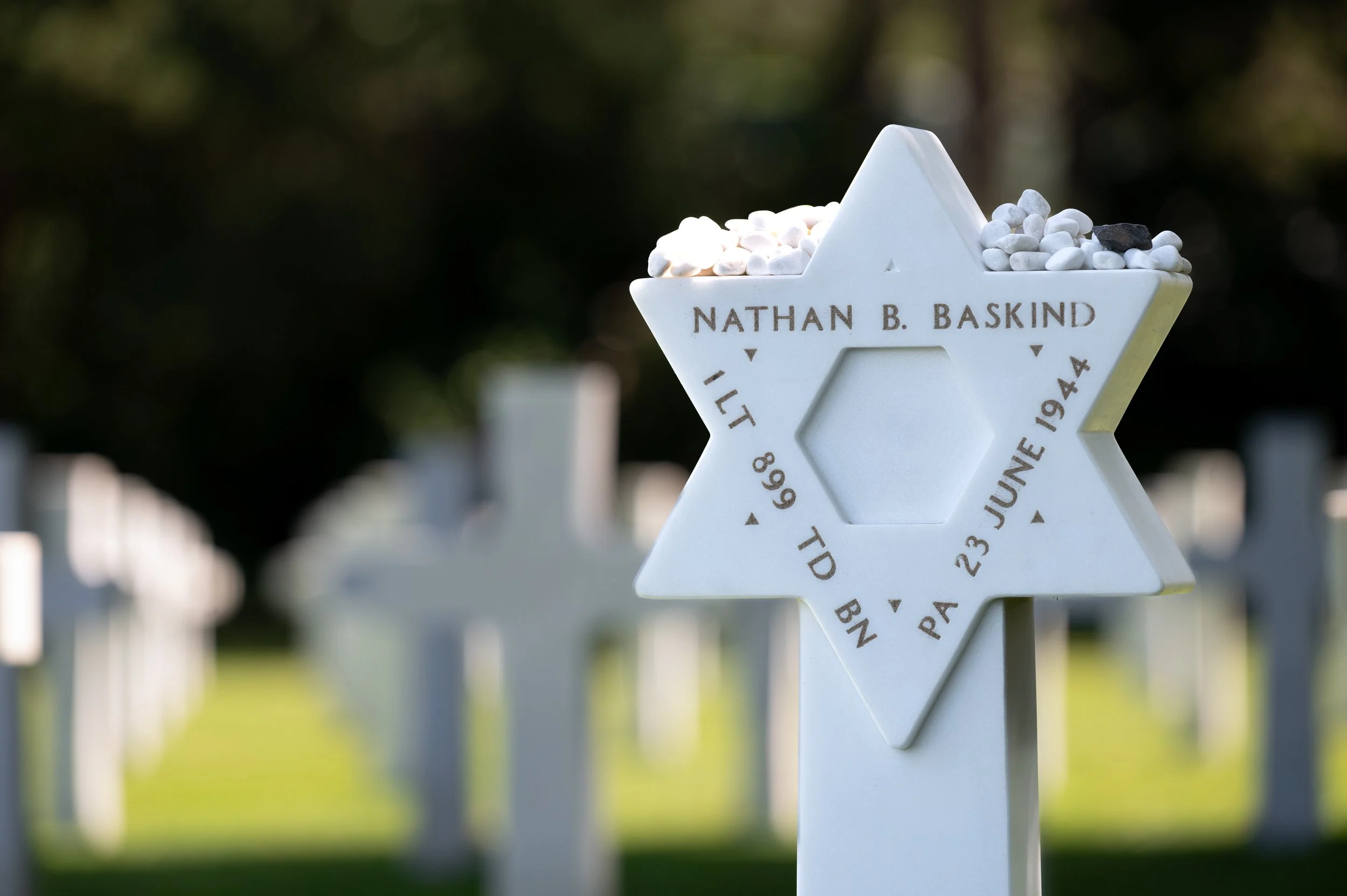
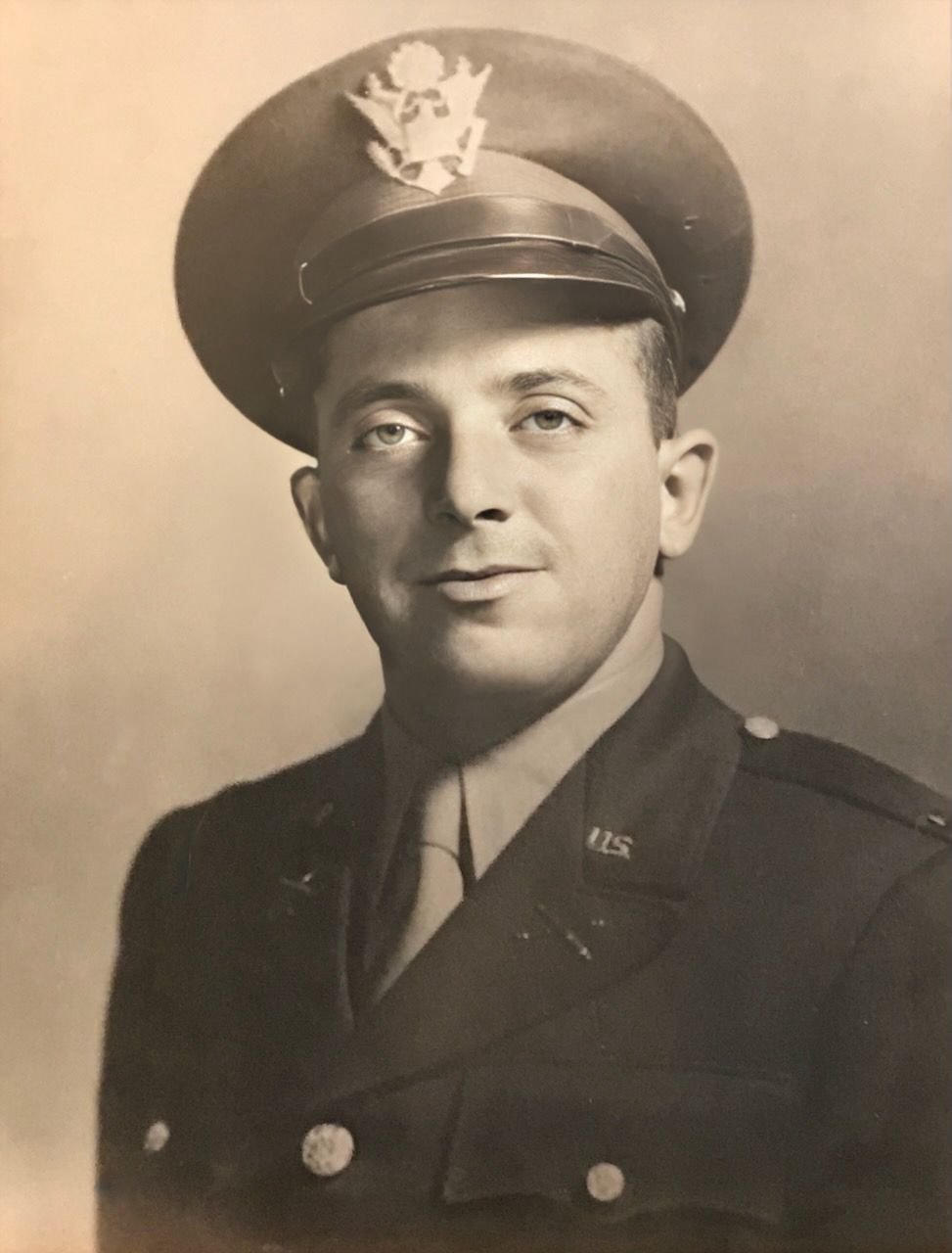
1st Lt. Nathan B. Baskind was a Jewish American tank commander who fought in the Battle of Normandy. Thirteen days later, he was wounded in the Battle of Cherbourg and died in German custody. Nate was buried under three stone Latin crosses in Marigny’s German Military Cemetery. The unthinkable had happened: a Jewish soldier, descended from Eastern European immigrants and related to many Holocaust victims, had been discarded into a mass grave alongside 49 Nazi and Wehrmacht soldiers.
Determined to right this historic wrong, I partnered with Operation Benjamin, an organization committed to correcting the markers of Jews mistakenly buried under Christian crosses. I became the designated next of kin, and over the next year we worked together to unravel the mystery that military bureaucracy had deemed closed for decades. Using preserved dental records, newly accessed German war archives, and desperate letters from my great-grandfather to Army officials, we pieced together the story of Nate’s final days. As I dug into his Army file, I discovered something our family had never known: Nate had survived the ambush and died as a prisoner of war.
What followed was a multinational effort involving delicate diplomatic negotiations with France and Germany, a December exhumation under brutal conditions, and forensic scientists from three countries identifying thousands of bone fragments. When the DNA results came back as a perfect match, even the experts were stunned.
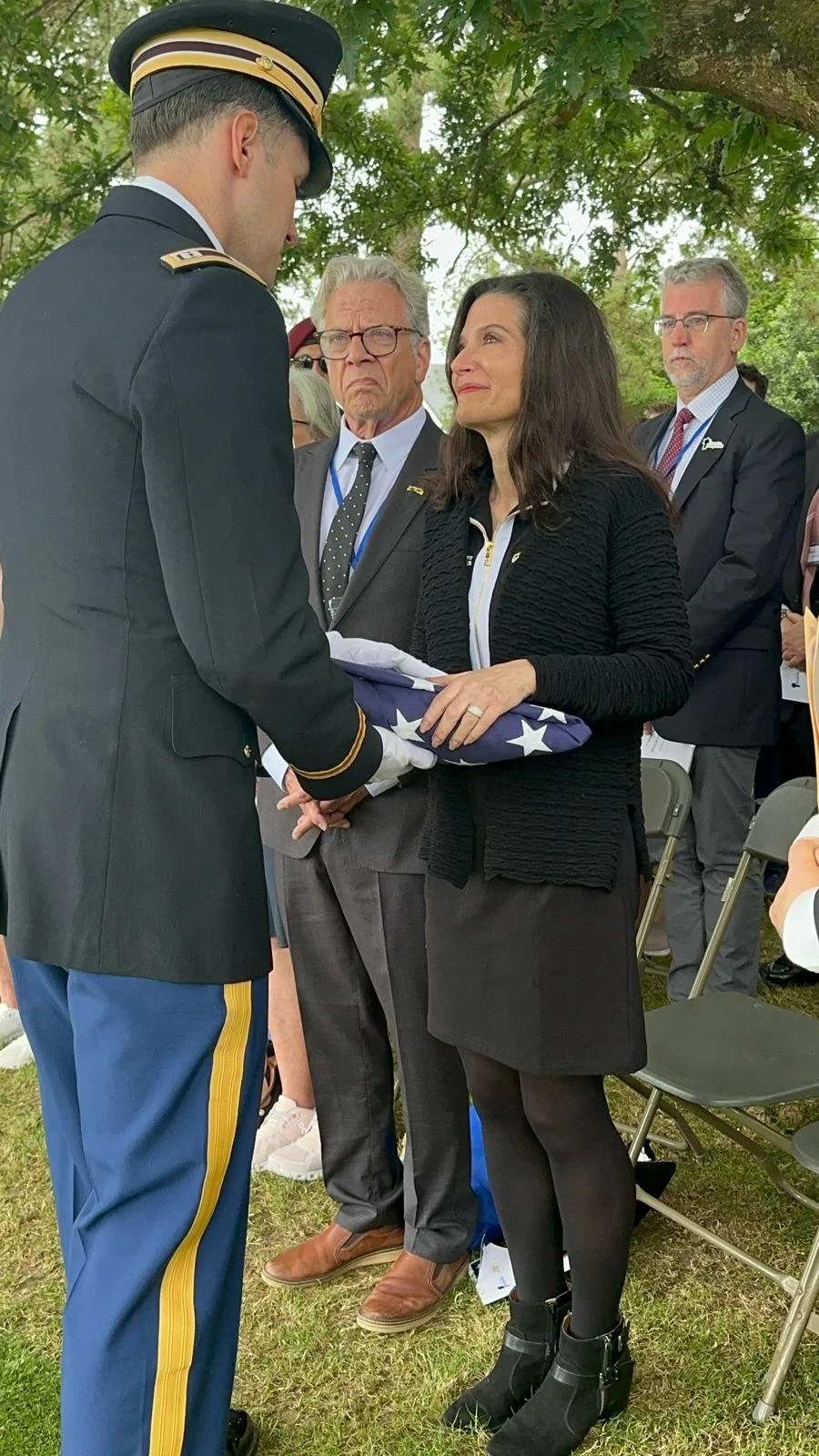
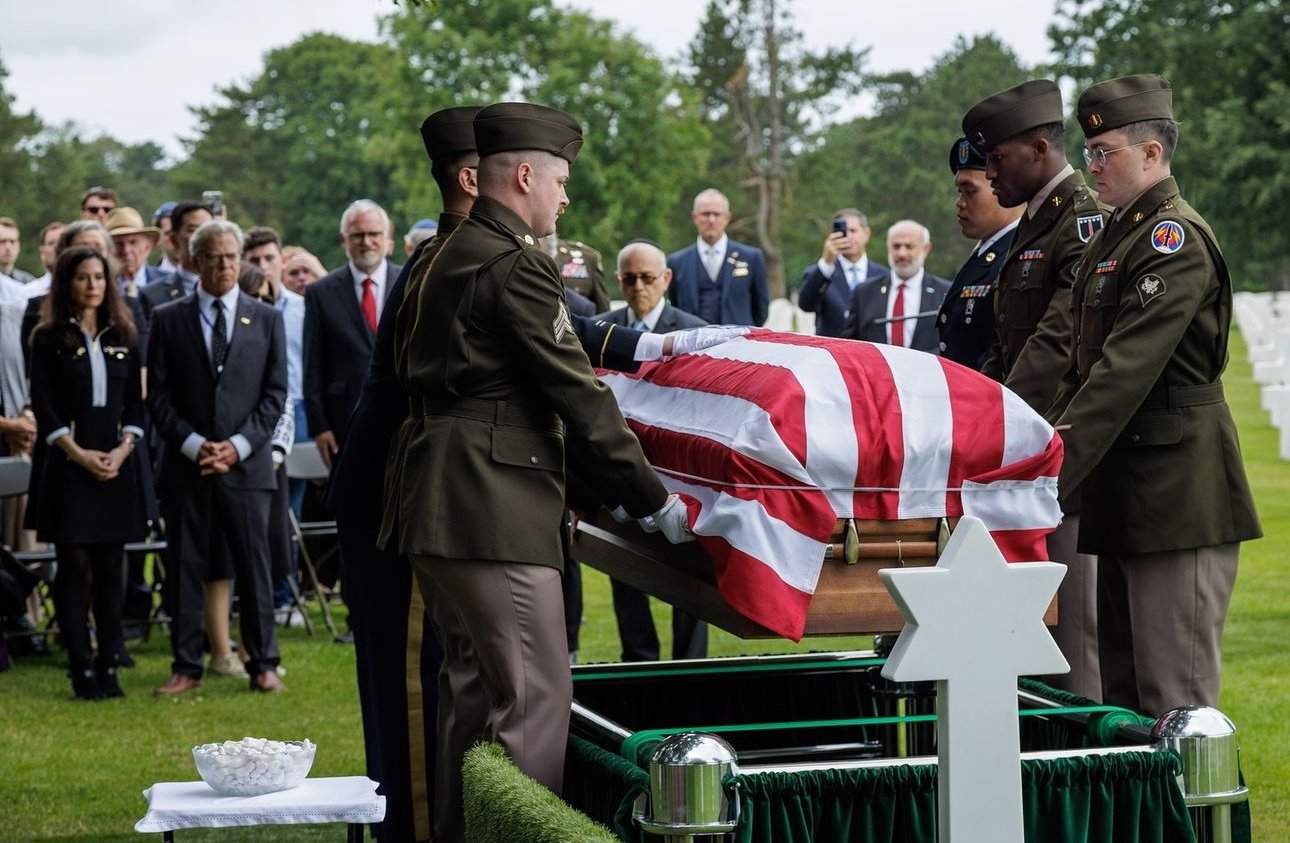
On June 23, 2024—eighty years to the day since Nate’s death—I stood in Normandy’s American Cemetery as he was finally laid to rest under a Star of David, with full military honors and dignitaries from three nations in attendance. That same day, I affixed a bronze rosette to the Wall of the Missing, only the 27th in the cemetery’s history, and the first ever placed by a family member.
But Nate’s story doesn’t end there. In the French village where he was ambushed, a memorial plaque now honors his life. In New Castle, Pennsylvania, another tribute stands near his childhood home. Most poignantly, the German War Graves Commission transformed the very cemetery where he lay forgotten into a living memorial. Visitors can now hear Nate’s story through an exhibit and documentary that highlight his Jewish identity and honor his sacrifice.
This book is a deeply personal detective story about one soldier and the great-niece who refused to let him remain forgotten. It also brings to light the overlooked story of Jewish American soldiers in WWII—and asks what we owe those who never returned.
“With bones, disinterment and DNA finally in the past, I have reflected on this unexpected and unbelievable mission to find Lt. Baskind. Here is what I hope my children have learned and what I will teach my students in the fall. We are at a moment where democracy cannot be taken for granted. We cannot assume antisemitism is no longer a threat and we cannot just sit by and hope everything will turn out okay. Uncle Nate fought for our freedoms, and his death reminds us that freedom is never free.
Burying the dead is among the most selfless of tasks because the dead can never thank you. It has been the honor of a lifetime.
In our fractured world today, the recovery of Uncle Nate, after 80 years in a German mass grave, represents a triumph of the goodwill of nations. All hope is not lost.”